Schools
The South Coast Prevention Team work together with schools across Bass Coast and South Gippsland shires to create healthier environments for students, staff and the wider community. Using a whole-school approach to health enables long-term changes to be supported in schools. If you have an idea to improve the health of your school and would like the support of our team to achieve it please contact us.
Smoking and Vaping Prevention in Schools
Preventing young people from taking up smoking and vaping is crucial to protecting their physical, social and mental wellbeing. Schools can play an important role in prevention by creating a supportive smoke and vape-free environment. Creating a supportive smoke and vape-free environment using a whole-school approach can improve the health and wellbeing of young people, their families and school staff.
The team support schools in the South Coast through the actions outlined in the Smoke and Vape-Free Toolkit For Schools. The resources in this toolkit use a whole-school approach to health and wellbeing based on five domains; leadership and commitment, healthy physical environment, healthy culture, student teaching and learning, supported staff, and families and community partnerships.
The team are running the South Coast Smoke and Vape-Free School Challenge during Term 2 - 3 2026. The challenge encourages Year 8 students to take on the role of community health researchers to create innovative and engaging campaigns that promote a smoke and vape-free future. Schools can participate by contacting prevention@basscoasthealth.org.au.
Useful school resources:
• Checklist for schools
• Vaping facts resources
• Seeing Through the Haze school curriculum resources
• No smoking and vaping signs
• Talking to your teen about vaping
Supportive School Food Environments
Eating nutritious foods can improve mental health, enhance cognitive skills including concentration and memory, and improve academic performance. Schools can play an important role in positively influencing students’ eating habits. Creating a supportive food environment where the food culture and activities reflect positive messages and practices, supports the physical, social, and mental wellbeing of young people, their families and school staff.
The team support schools in the South Coast through the actions outlined in the Supportive Food Environments Toolkit for Schools. The resources in this toolkit use a whole-school approach to health and wellbeing based on five domains; leadership and commitment, healthy physical environment, healthy culture, student teaching and learning, supported staff, and families and community partnerships.
Vic Kids Eat Well
Vic Kids Eat Well focuses on improving the food and drink environments where kids spend their time, including schools and outside school hours care (OSHC). By harnessing the power of community and taking these simple steps together, we can create change to give all kids across Victoria the healthy start they deserve.
Who is eligible to participate?
All schools and OHSC in Victoria are eligible to participate. The program is free.
What are the benefits of participating?
• Implement simple changes and healthy swaps that support students to learn and thrive
• Receive support and advice from a local health promotion professional
• Be rewarded for completing bites
• Receive recognition for creating a healthy school environment
• Celebration of your achievements in local media
To learn more about Vic Kids Eat Well click here.
Healthy Places Healthy Futures

All children and young deserve to learn, grow and thrive in environments that support their health and wellbeing. Healthy Places Healthy Futures (formerly the Achievement Program) makes it easier for your school to bring together and strengthen what you’re doing to support health, wellbeing and learning.
Healthy Places supports a whole-school approach across six priority areas:
• Food, Nutrition and Oral Health
• Physical Activity and Movement
• Mental Health and Wellbeing
• Smoking and Vaping
• Sun Protection
• Sustainability and Health.
A flexible action guide is also available to address other health areas using the Healthy Places framework.
Schools with recognition of priority areas achieved under the Achievement Program remain valid.
Who is eligible to participate?
All schools in Victoria are eligible to participate. It is free.
What are the benefits of participating?
• Practical action guides that help you coordinate and build on the work you’re already doing
• Trusted resources and programs in one place, saving you time and effort
• Tailored support from a local health promotion professional to provide guidance and practical ideas
• Simple tools to track progress and share achievements with your community
• Promotional materials and recognition opportunities that demonstrate your commitment to health and wellbeing to families and your broader community
• Confidence that you’re following evidence-based practice and supporting key health and wellbeing requirements, standards and priorities
• Recognition by the Victorian Government as a Healthy Place, celebrating your commitment to supporting the health and wellbeing of children and young people.
To learn more about Healthy Places Healthy Futures and to become a member click here.
Active Schools
The Active Schools framework supports schools to take a whole-school approach to physical activity, recognising there is no single solution to shifting inactivity. It takes a multifaceted and system-wide effort. An active school provides students opportunities to be active through the 6 priority areas outlined in the framework: quality physical education, quality school sport, active classrooms, active travel, active recreation and a supportive school environment.
Active Classrooms:
Active classrooms incorporate movement into classroom learning. Small changes in the classrooms can have big impact on student learning behaviour, health and contributes to their daily activity levels. Active classrooms involve active breaks between and within learning, learning activities which involve movement and learning outdoors.
During Term 2 - 3 2025 the team ran the South Coast Active Classrooms Primary School Challenge. The challenge encouraged primary school students to be leaders for change by creating and leading their own active classroom activities. The challanged has now closed.
Useful school resources:
• Active Schools Toolkit
• Active Classrooms Information and Resources
• Outdoor Learning Toolkits for Teachers
• Movement Break Cards Template and Worksheet
Health and Wellbeing Newsletter
The South Coast Prevention Team distribute newsletters to schools in the Bass Coast and South Gippsland shires. The newsletters are filled with ideas and resources to help improve the health and wellbeing of students, their families and staff.
Useful Links and Resources
• Active Schools
• Alcohol and Drug Foundation
• Be You
• BodyKind
• FoodChecker
• Get Active Victoria Kids Voucher Program
• Healthy Eating Advisory Service (HEAS)
• Healthy Places Healthy Futures
• Narragunnawali: Reconciliation in Education
• National Nutrition Foundation
• Oral Health Victoria
• Quit Victoria
• ResourceSmart Schools
• Respectful Relationships
• School Canteens and Other School Food Services Policy
• Smile Squad
• Stephanie Alexander Kitchen Garden Foundation
• SunSmart
• The Resilience Project
• Victorian Aboriginal Community Controlled Health Organisation (VACCHO)
• Vic Kids Eat Well
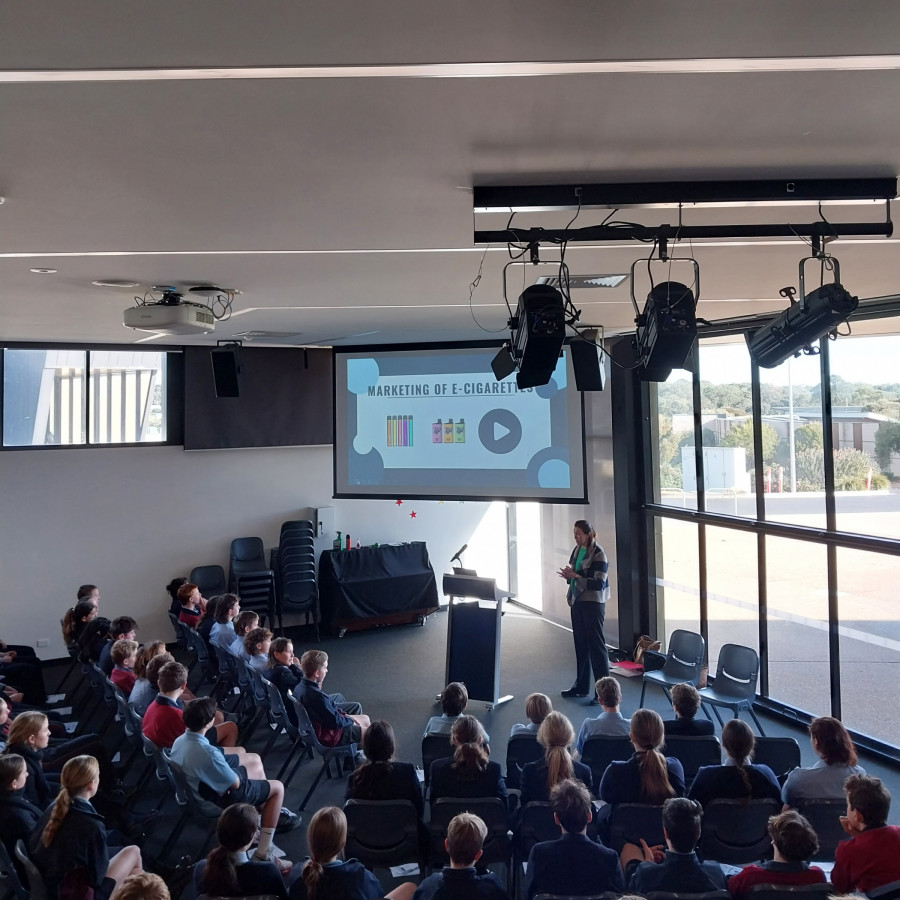
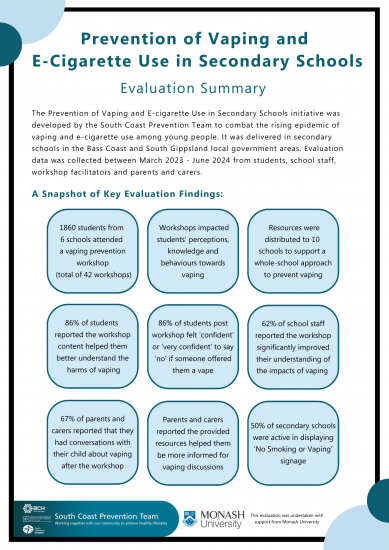
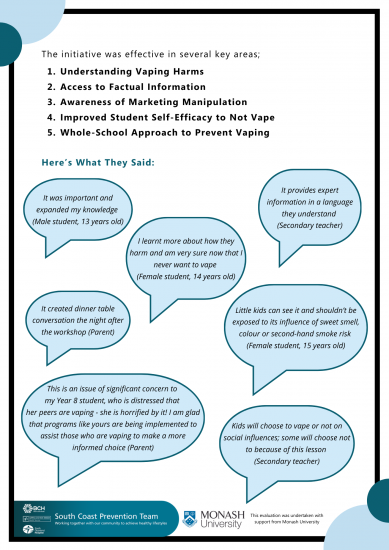
The evaluation data strongly indicates the Prevention of Vaping and E-cigarette Use in Secondary Schools initiatives was a needed and successful endeavour. The initiative significantly impacted students’ perception, knowledge and behaviours towards vaping by providing a platform for discussion, engagement, and access to current information and resources.
Whilst the initiative has now ended, the team continue to support secondary schools in the South Coast through the actions outlined in the Smoke and Vape-Free Toolkit For Secondary Schools.
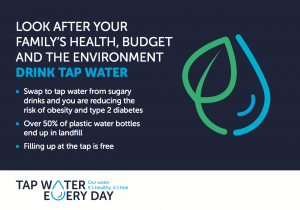
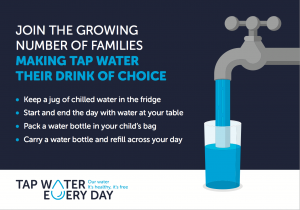
Tap Water Every Day (2019)
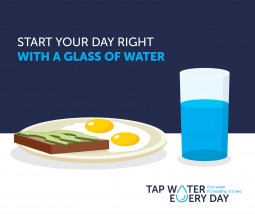
Our water, it’s healthy, it’s free campaign was a social marketing project delivered between 10 September through to 10 December 2019. The campaign was targeted at reducing consumption of sugar sweetened beverages (SSB) and increasing consumption of tap water of teenage males (13 – 18 years) in the South Coast (Bass Coast & South Gippsland Local Government Areas).
Young Australian men (12 - 24 years) are very high consumers of sugar sweetened beverages and soft drink in particular. The consumption of sugar sweetened beverages is associated with increased energy intake and in turn, weight gain and obesity. It is well established that obesity is a leading risk factor for diabetes, cardiovascular disease and some cancers.
Unlike other social marketing campaigns, Tap Water Every Day was co-designed with local young people. Teenage males worked together with the South Coast Prevention Team from start to finish to understand the issue and to ensure the campaign was relevant to them and their peers. The key messages of the campaign, the communication channels used and the settings targeted were all developed in partnership with teenage males.
During the campaign period based on ideas generated during the co-design process with our local young males and stakeholders, a variety of activities and events occurred across the sub-region to support the social marketing campaign.
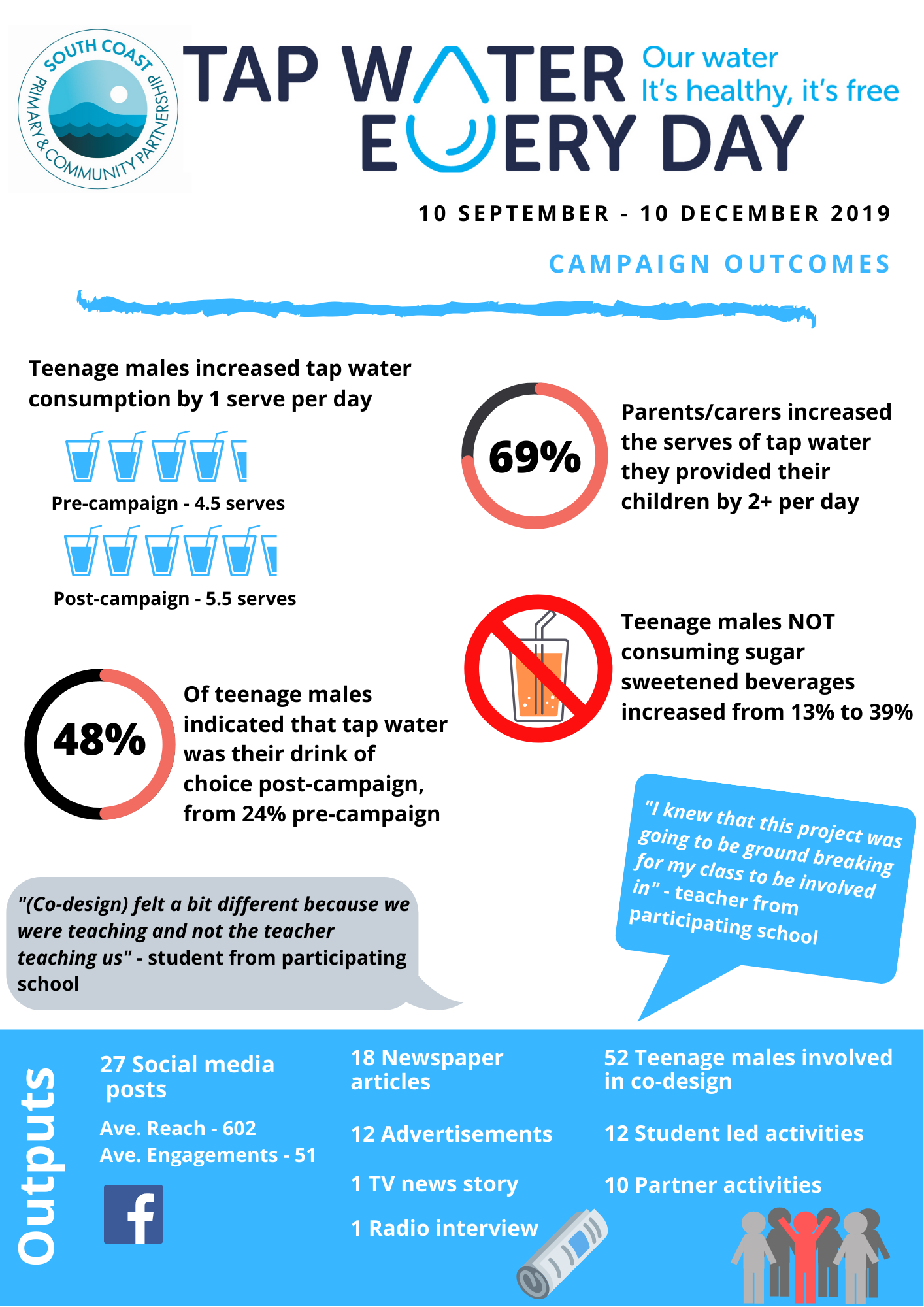
Evaluation findings from the campaign indicated that there was an increase by 1 serve of water per day by the primary target audience and over two thirds (69%) of parents increasing the serves of tap water they provide their children by at least 2 per day. There was an increase in the primary target market avoiding SSB post campaign, with 39% indicating they did not consume any SSB in the week prior to surveying compared to 13% pre-campaign.
Pre-campaign over 80% agreed or strongly agreed that tap water is an important part of a healthy diet and post campaign this increased to 87% of respondents. Conversely, pre-campaign close to 80% of respondents disagreed or strongly disagreed that SSB’s were good for their health post campaign this decreased to 73%.
The co-design approach utilised in the development and implementation of this campaign highlighted some key learnings for the project team. These learnings have provided much value to the South Coast Prevention Team and will influence future projects.
To download campaign resources please click on the links below:
Poster 1 A4
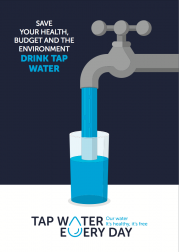
Poster 1 A3
Poster 2 A4
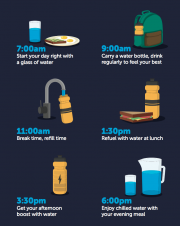
Poster 2 A3
Recipe Card 1
Recipe Card 2
Social Media Assets - 9 Files (ZIP File)